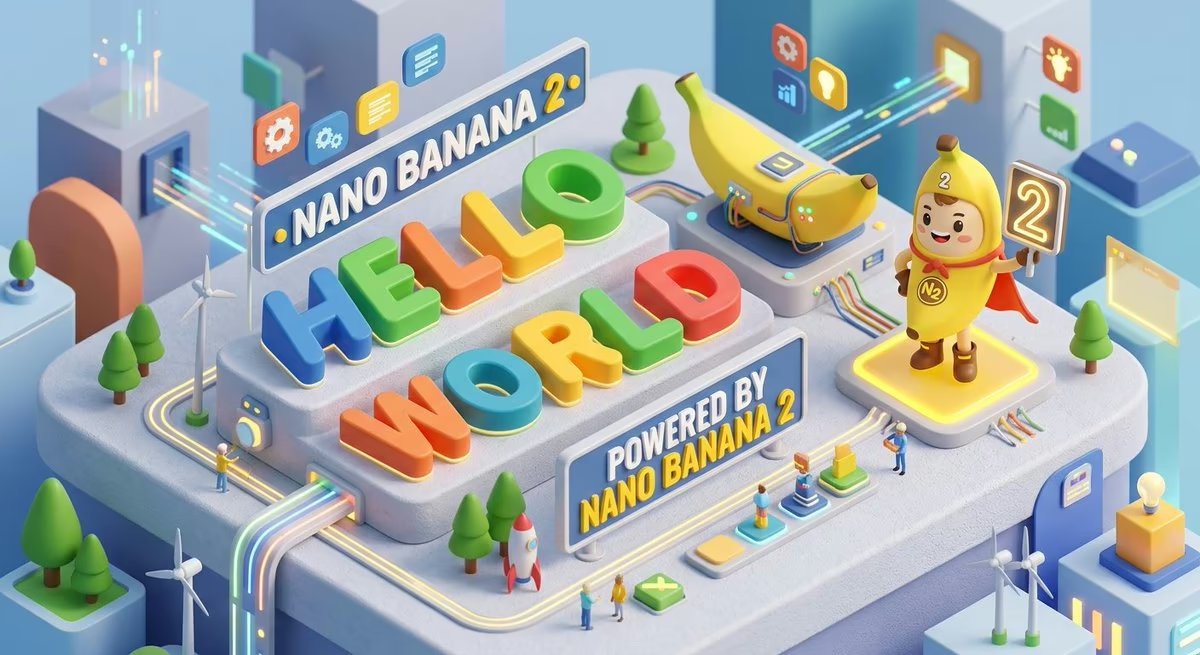
Google just dropped Nano Banana 2, and it's a big deal. Released on February 26, 2026, this latest AI image generation model — officially known as Gemini 3.1 Flash Image — merges the intelligence of Nano Banana Pro with the blazing speed of Gemini Flash. Whether you're a designer, marketer, content creator, or just someone who loves turning ideas into visuals, Nano Banana 2 is built for you.
In this post, we'll break down everything you need to know about Nano Banana 2: what it is, what it can do, how it compares to its predecessors, and how you can start using it right now on Nano Image AI.
A Brief History: From Nano Banana to Nano Banana 2
The Nano Banana story started in August 2025, when Google launched its first Gemini-powered image generation model. It quickly went viral, with millions of people creating AI-generated images through the Gemini app.
In November 2025, Google followed up with Nano Banana Pro, built on the Gemini 3 Pro architecture. It offered studio-quality creative control and deeper reasoning capabilities, but at the cost of slower generation times.
Now, Nano Banana 2 brings the best of both worlds — Pro-level intelligence at Flash-level speed. Google has made it the default image generation model across its entire product suite, replacing the original Nano Banana in the Gemini app, Google Search, Google Lens, and more.
Key Features of Nano Banana 2
⚡ Pro Quality at Flash Speed
Nano Banana 2 is built on the Gemini 3.1 Flash architecture, which means it generates images significantly faster than Nano Banana Pro — roughly 4-6 seconds per image compared to 10-20 seconds with Pro. Despite this speed boost, it retains approximately 95% of Pro's image quality, making it the ideal choice for most use cases.
🌍 Advanced World Knowledge
One of Nano Banana 2's most impressive capabilities is its ability to tap into Gemini's real-world knowledge base, powered by real-time web search. This means the model can accurately render specific subjects, landmarks, and real-world references. It can also create infographics, convert notes into diagrams, and generate data visualizations with factual grounding.
✍️ Precision Text Rendering & Translation
Text in AI-generated images has historically been a weak point for most models. Nano Banana 2 changes that with crisp, accurate text rendering — perfect for marketing mockups, greeting cards, posters, and logos. Even better, it supports in-image localization, allowing you to generate or translate text across multiple languages directly within the image.
🎯 Enhanced Instruction Following
Nano Banana 2 is significantly better at understanding and following complex prompts. It captures specific nuances in your requests, so you spend less time regenerating and more time creating. Whether you're describing a detailed scene or requesting a specific style, the model delivers with greater precision.
📐 Production-Ready Resolutions & Aspect Ratios
From 512px thumbnails to stunning 4K output, Nano Banana 2 gives you full control over resolution and aspect ratio. It supports standard formats like 16:9, 9:16, 2:1, and even extreme ratios like 1:4 and 4:1 for banners and specialized layouts. Your visuals will look sharp everywhere — social media, websites, presentations, or print.
🎨 Visual Fidelity Upgrade
Expect more vibrant lighting, richer textures, and sharper details across all your generations. Nano Banana 2 closes the gap between speed and visual fidelity, delivering photorealistic imagery that previously required the slower Pro model.
👥 Subject Consistency for Storytelling
Need to create a multi-scene storyboard or a series of images with the same characters? Nano Banana 2 can maintain character resemblance for up to 5 characters and object fidelity for up to 14 objects in a single workflow. This makes it perfect for comics, visual stories, product series, and marketing campaigns.
🔍 Image Search Grounding
This is a feature unique to Nano Banana 2 — the model can retrieve real-world reference images via Google Search during the generation process. This significantly improves accuracy for specific subjects like landmarks, products, or branded content.
Nano Banana 2 vs Nano Banana Pro: Which Should You Use?
| Feature | Nano Banana 2 | Nano Banana Pro |
|---|---|---|
| Architecture | Gemini 3.1 Flash | Gemini 3 Pro |
| Speed | ~4-6 seconds | ~10-20 seconds |
| Image Quality | ~95% of Pro | Highest fidelity |
| Text Rendering | Excellent | Best-in-class |
| Max Resolution | Up to 4K | Up to 4K |
| World Knowledge | Yes (with web search) | Yes |
| Subject Consistency | 5 characters / 14 objects | 14 reference images |
| Image Search Grounding | ✅ Yes | ❌ No |
| Best For | Rapid generation, bulk workflows, everyday use | High-fidelity tasks, maximum accuracy |
In short: Nano Banana 2 is the right choice for most people, most of the time. It's faster, more cost-effective, and nearly as capable as Pro. Reserve Nano Banana Pro for critical, client-facing work where absolute maximum quality is essential.
Where Is Nano Banana 2 Available?
Google is rolling out Nano Banana 2 across its ecosystem:
- Gemini App — Default model for Fast, Thinking, and Pro modes
- Google Search — AI Mode and Google Lens across 141 countries
- Flow — Google's AI creative studio
- Google Ads — For ad creative generation
- Developer APIs — Gemini API, Vertex AI, AI Studio, Google Antigravity, Firebase, and Gemini CLI
- Third-party integrations — Adobe Firefly, Figma, Notion, and more
Try Nano Banana 2 on Nano Image AI
We've added Nano Banana 2 as a model option on Nano Image AI. You can start generating images right now — no complicated setup required.
Simply select Nano Banana 2 from the model dropdown, enter your prompt, and watch your ideas come to life in seconds. It works for both text-to-image generation and image editing workflows.
Whether you're creating social media content, marketing materials, product mockups, storyboards, or just exploring creative ideas, Nano Banana 2 on Nano Image AI gives you access to Google's most advanced image model with the speed and quality you need.
Final Thoughts
Nano Banana 2 represents a significant milestone in AI image generation. By combining Pro-level capabilities with Flash-level speed, Google has made high-quality AI image creation more accessible and practical than ever. The addition of features like image search grounding and improved text rendering makes it a versatile tool for creators and businesses alike.
We're excited to offer Nano Banana 2 on Nano Image AI and can't wait to see what you create with it.